
For years we’ve been inundated with shoe technology to prevent falling / dropped / collapsing arches.
But what if we had our own method of reducing the effects of these flat arches.
WE DO….and we need the big toe to do it.
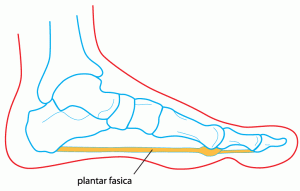
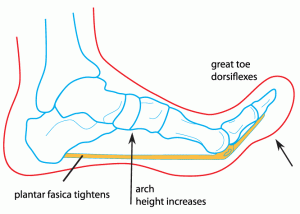
Below we can see the Windlass Mechanism in action but you can feel this in action for yourself. Try this
Stand barefoot and make sure your weight is spread evenly though the full foot from back to front. Once you feel and even distribution then lift your big toe. Ideally you should be able to feel the arch changing in tension at least if not visibly see a change in shape.
But it doesn’t stop there….

If you repeat the toe lift you may also be able what it does to the knee and the hip i.e. rotate them back outwards.
Now this movement is slight when just lifting your big toe but its there, or at least it should be.
Most people with over-pronation of the foot (another name for flat arches) also
show inwards rotation of the knee and hip. one of the benefits of engaging the big toe is that it begins the signal for the muscles further up the leg to stop this inwards motion and reverse the movement in preparation for push off,
From a side on view in walking and running mechanics if the big toe lacks movement it cannot provide the windlass mechanism or the signal for external or outward rotation and allows the knee to drive too far forward over the toes along with an early heel lift
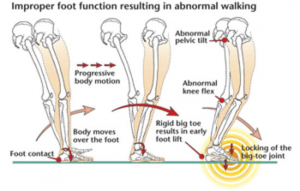
This leaves the calves on their own to provide all the push off power. Ive never seen a runner without tightness in the calves and this is one of the main reasons why.
SO WHATS TO BE DONE??
Well….. Concentrating on how well we transfer our body-weight through the foot allows us to be more specific on how well we load the big toe. Repeatedly loading the big toe correctly particularly prior to running or training will help to improve the mechanics of the foot and the kinetic chain above it as well as increasing local strength in the foot.
I’ve previously covered this in my Running Strength ebook which can be downloaded below but the area of most concern when regarding the big toe is Phase 3 where we aim to get up on the toes smoothly.
How well we should be able to do this and all the phases is outlined in the training levels below.
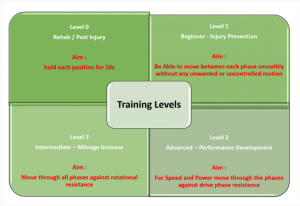
There may be some joint restrictions through the foot along with soft tissue tightness which may need to be addressed but even so we should all be able to complete level 0 for Optimal Function in everyday activities
Download the full Running Strength eBook here – Running Strength Leo Neenan