
If you’re worried about your basic flexibility and / or strength then doing the following DIY Assessment once a month can show if you are changing for better or worse as time passes.
To make it work mark each exercise out of 10.
Give yourself a 10 if you find the exercise easy
Give your self a 1 if you find the exercise impossible
If your overall score is less than 40 then contact a PT to help with a training plan to get you better for your training.
Hamstrings:
Tight hamstrings can hinder your stride length and cause you to over stride to make up speed. Tight hamstrings also can lead to lower back pain.
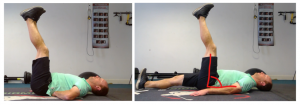
Try this: Lie flat on your back and put your hand under the small of your back. Keeping the back flat on your hand raise the legs so that the hip is at 90’ knees as straight as possible. Lower one leg to the floor and maintain the back, hip and knee position of the up leg. Anything short of reaching the ground without moving the back or the up leg will restrict your swing phase.
Hip Flexors:
Tight hip flexor muscles can limit hip extension and rotation throughout the stance phase, which can cause poor gluteal engagement and a lack of power in the push off phase leading to an over reliance on the calf muscles. on the bike tight hip flexors make it harder to come over the top of the pedal stroke smoothly and shifting your position on the saddle as a consequence.
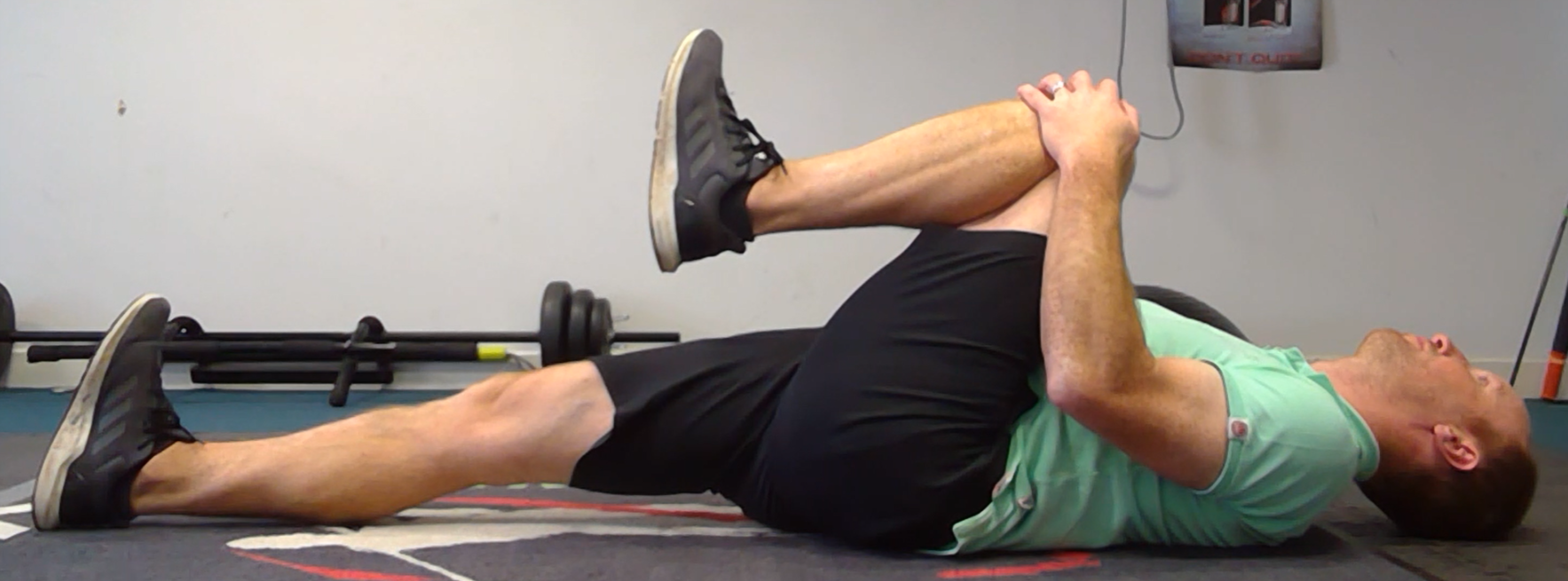
Try this: Lie flat on your back and pull one knee to your chest. If the opposite leg stays flat on the ground, you pass. If the opposite leg raises up at all it is a sign of tight hip flexors.
Spinal Rotation:
Your core is one of the most important muscle groups to keep limber. A tight core can limit rotation in the swing phase or impede saddle stability, restrict power and cause lower back pain.
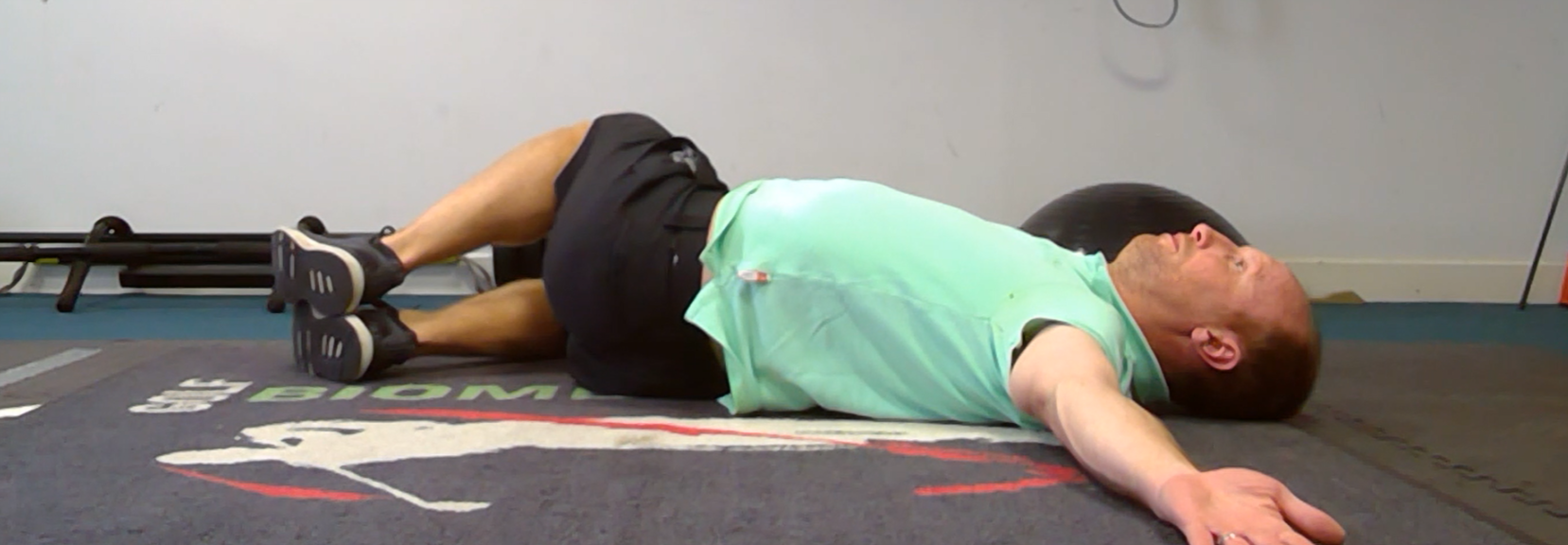
Try this: Lie on your back with your arms out to the side in a T-position. Raise legs in the air and bend knees and hips to 90 degrees. Rotating at the waist slowly attempt to lower the legs to one side while keeping the opposite shoulder flat on the ground. Stop when the legs reach the ground or when the opposite shoulder comes off the ground. If the shoulder raises off the ground before the legs reach the floor you are tight and need to stretch through the hips and lower back,
Shoulders:
Having tight shoulders can restrict your torso mobility and cause to hunch during your run or cycle.
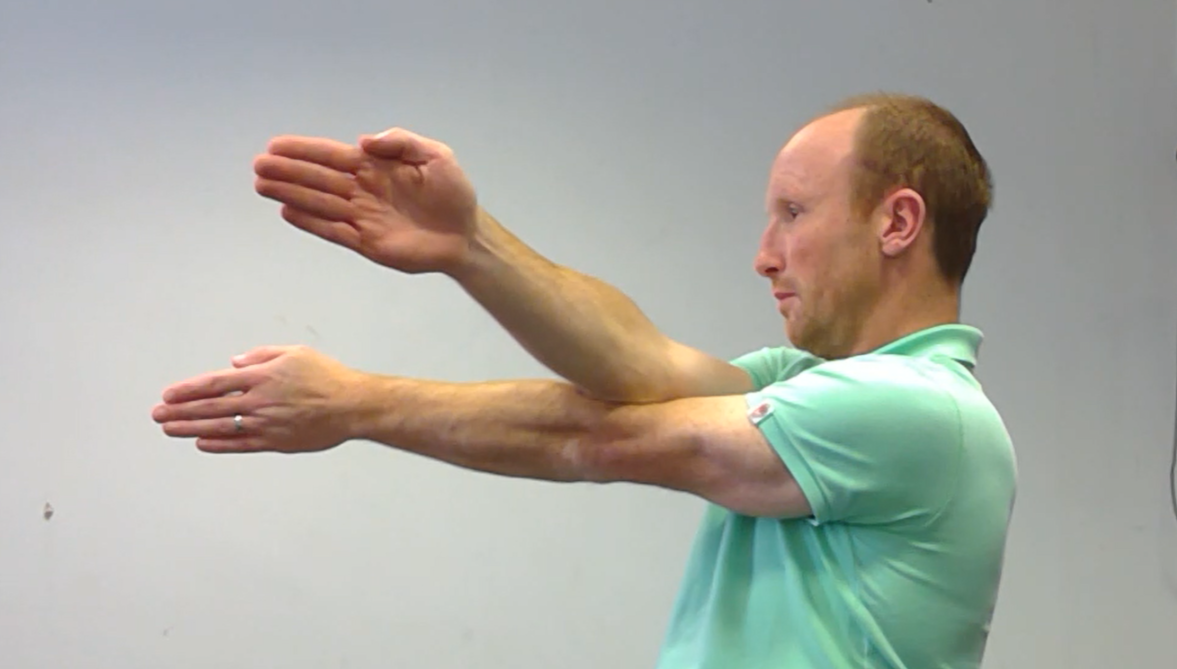
Try this: Raise your arms to shoulder level, keeping both elbows straight. Bring your right arm across the top of the left arm, return to the original position. You should be able to get your arm between the elbow and shoulder of the opposite arm. Repeat, switching arms.
Balance Assessment
The need for a strong foundation and balance in the golf swing can never be overlooked. You may not find it important until you are standing on the side of a hill looking down over a shot or standing on grass hitting out of a bunker. Try this: Stand on one leg as long as you can. If you can stand longer than 60 seconds with no problem, try closing your eyes, or standing barefoot on a pillow. If you cannot balance longer than 30 seconds on one leg, balance is something you should work on.
Strength Assessment
Arguably the most important group of muscles used in sport is the core. Having a strong core can limit back injuries, increase power and speed, and assist in body control throughout the exercise.
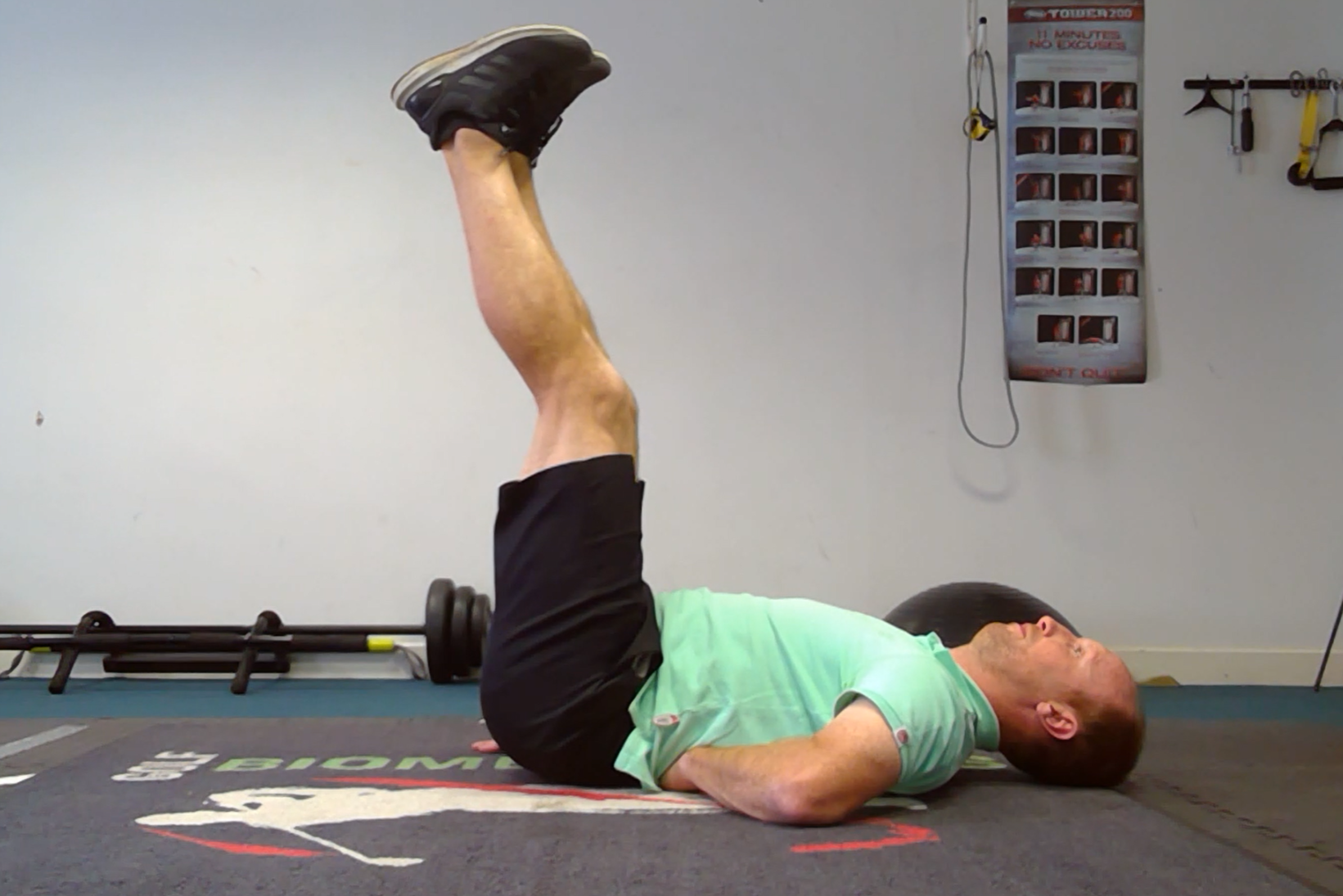
Try these: Lower Abdominal — Start by lying on the ground placing your hand under your lower back. Bend your knees and raise both legs into the air. You should feel pressure on your fingers. Now gently activate your core by pulling in your belly button and attempt to lower your legs to the floor without any pressure coming off your hand. If any pressure comes off your hand you have weak abdominals and need to strengthen them.
Reverse Lunge:
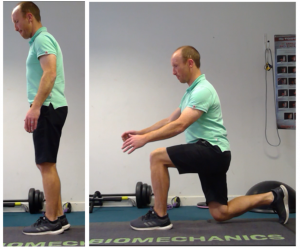
Standing upright with just body weight or holding dumbbells by your sides. Draw your belly button inwards lunge back with one leg to the point where your back knee just touches the ground – keep your 2 feet in line when you step back. Push with your legs to return to standing and repeat 3 times. The lunge is a useful test for identifying tight hip muscles (tight hips) and poor upper leg and core strength, which will be seen as an inability to maintain an upright torso, an inability to maintain balance for 4 reps and/or keep the pelvis square to the leading leg.
Perform on the opposite side.
A word of caution: Do not proceed with this assessment if you have any existing injuries, and be sure to warm up the muscles for five minutes before beginning.
If you feel any pain on any exercise contact a health professional for advice.
This Assessment is a way of tracking how you feel over time and is not designed to diagnose injuries of any sort.