
In Part 1 we looked at the value of assessing / measuring Running Symmetry. This time we are going to look at why its useful to keep track of your joint mobility.
The reason is relatively simple an athlete lacking hip flexion may compensate by creating excessive flexion at the lumbar spine or an athlete lacking ankle dorsiflexion may overly pronate and collapse the knee inwards during running.
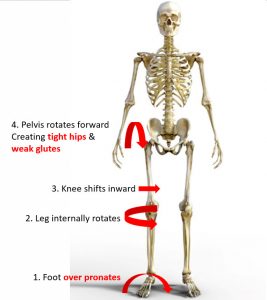
Every runner with any experience of buying shoes has heard of over pronation and every running mag or blog has harped on about using your glutes more when running.
But going on the example of the pic above is it really worth doing all the squats and kettle bell swing if all you do to offset the over pronation is to buy a pair of Asics Kayanos or similar??
What the pic shows is that when the foot collapses in due to ankle joint tightness then the knee also collapses in.
This prevents the glutes from working as well as they should so doing glute bridges may improve glute strength it doesnt always lead to better glute function during running.
However if we know you have tight ankles and hips to begin with we can improve these and then retest how well the glutes work and get a clearer idea of what needs to be improved. Simple tests like the Kinetisense Jump and Reach Test, Kinetisense Vertical Jump Test and Joint Range of Motion Tests to identify any link between joint mobility and functional ability.
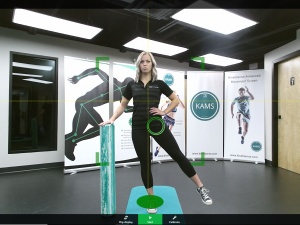
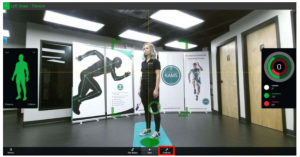
Also tracking joint mobility through the training cycles can show up negative changes before they start to cause niggles or pain. This limits loss of training time leading to fitter healthier athletes.