
In Part 1 of this article I showed how too many games allied with persistent training can lead to player overload and fatigue. This in turn will lead to injuries or burnout for players and the Podcast from Off the Ball highlights this in a gifted GAA player asked to do too much at a young age which resulted in hip operations and career over at the age of 24.
The problem is getting more and more prevalent and being seen in younger ages so what can we test and monitor to reduce the risks for the developing player.
Sadly there is no 1 test that will cover all angles
On the other hand there are a lot of factors that can be tested and monitored – we just have to decipher which ones are most suitable for the individual.
I’ve broken down some of the factors that can be measured in the following table and while this is not an exhaustive list it should give an indication of what can be measured
| Technology Free Measureables | Technology Based Measureables | Development Tests / Standards |
| AU = RPE x Duration (Time and Effort) | Metabolic Load / Dynamic Stress Load | Movement Quality / Movement Screen (KAMS) |
| Sleep Quality / Quantity | High Speed Running Distance | Force Velocity Profile |
| Stress / Wellness | Number of Accelerations & Decelerations | 3 Cone Drill / Change of Direction Drill |
| Soreness | Distance in High HR Zone | Explosiveness – Efficiency – Endurance |
| Enjoyment | Impacts / Tackles | Skills |
From the above its clear that we can start to monitor a players workload from just how much time and effort is put in. No one wants to limit how much time a player spends at their sport but sometimes we have to manage the amount of effort that is asked of them. With multiple teams and managers this is harder to do.
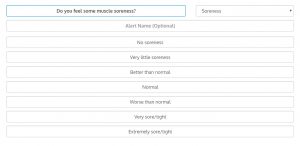
Other factors such as Stress, Soreness and Enjoyment can be managed with a relatively simple questionnaire. I use the one below for muscle soreness for example but the questions can be adapted for any variable really. Any changes in these variables can indicate a decrease in the players readiness for games / training.
In the technology section the variables are more related to team / contact sports but running variables can also be measured.
These measurements are more accessible now more than ever with affordable technology such as VERT Sensors, Catapult GPS pods and Statsports Apex Athlete Pods Among others
These sensors automatically test the different variables and a training log can track overloads of any and all variables help to preempt any injury or burnout from occurring. Previously these pods were out of range for development athletes but entry level pods are now priced similar to Fitbits etc and far out perform any of the fitness trackers on the market.
In Column 3 of the table above a list of tests that can be measured and tracked is given
Each sport has its own performance markers which should be identified prior to any testing being carried out and assessed relative to the needs of the athlete. Once a base line test is done development can be tracked relative to this score. For Field or ball sport players the speed test should replicate their sport if possible.
if an athletes shows increased speed over 40m this doesn’t always equate to quicker change of direction which may be more prevalent in their sport. Some positions may not require 40m sprint speed so you have to ask whether this si a relevant test and if not choose a more appropriate one.
In Part 3 of this series I’ll hopefully put together a list of the available technologies and their usefulness to each sport but for now consider what your needs are or what your child needs for enhanced performance development and make a plan from there.